_edited.png)

Why Karting?
There are many amazing and beneficial reasons to try Kart Racing. Here are some of the top ones:
Improves Mental & Physical Wellness
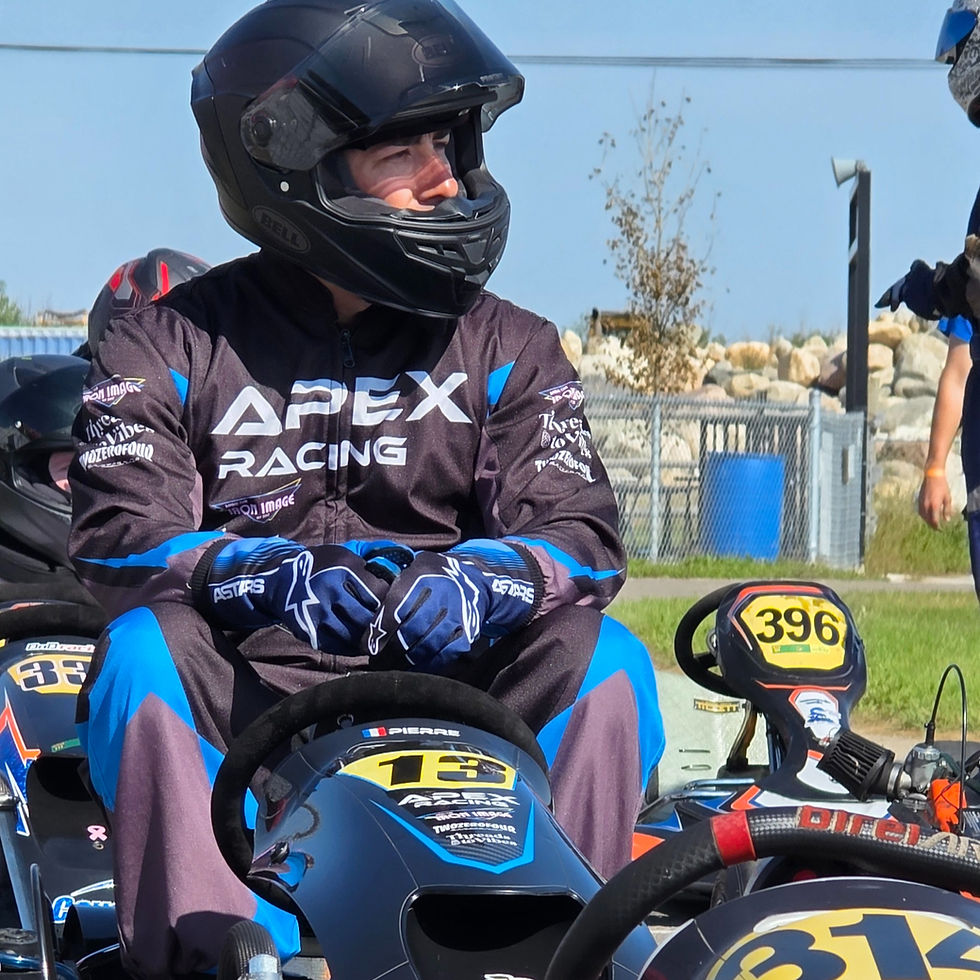
Karting, especially in the higher classes of competition, helps to sharpen athleticism by building on high intensity physical endurance and mental precision. Drivers build core and upper body strength to manage G-forces while maintaining the fine motor skills needed for precise steering. Mentally, the split second decision making at high speeds helps to sharpen reflexes, hand-eye coordination, and deep concentration.
Teaches Kids the Fundamentals of Driving
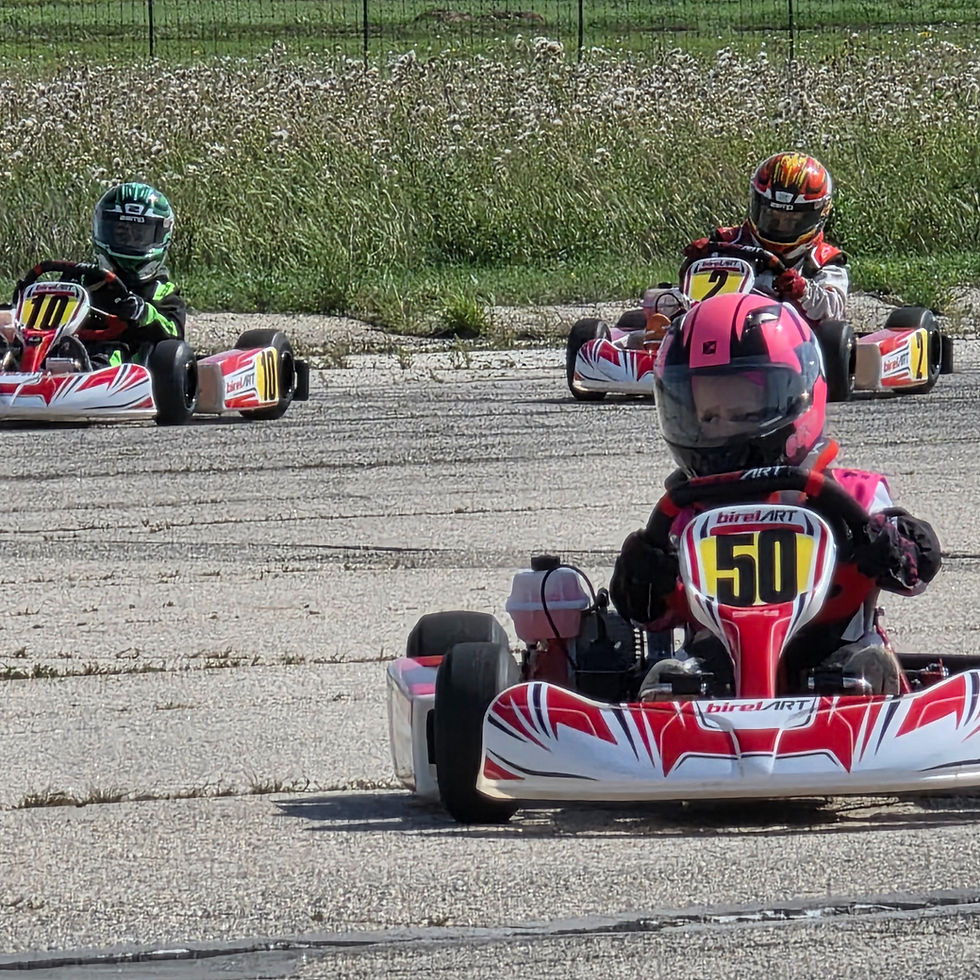
By feeling the immediate relationship between steering, braking, and weight transfer, kids learn to prioritize smoothness and precision, which are the building blocks of safe driving. Beyond mechanics, the track environment sharpens their spatial awareness and peripheral vision, training them to anticipate hazards and judge distances with a level of focus rarely found in a standard passenger car.
Hands-on Learning of Mechanics
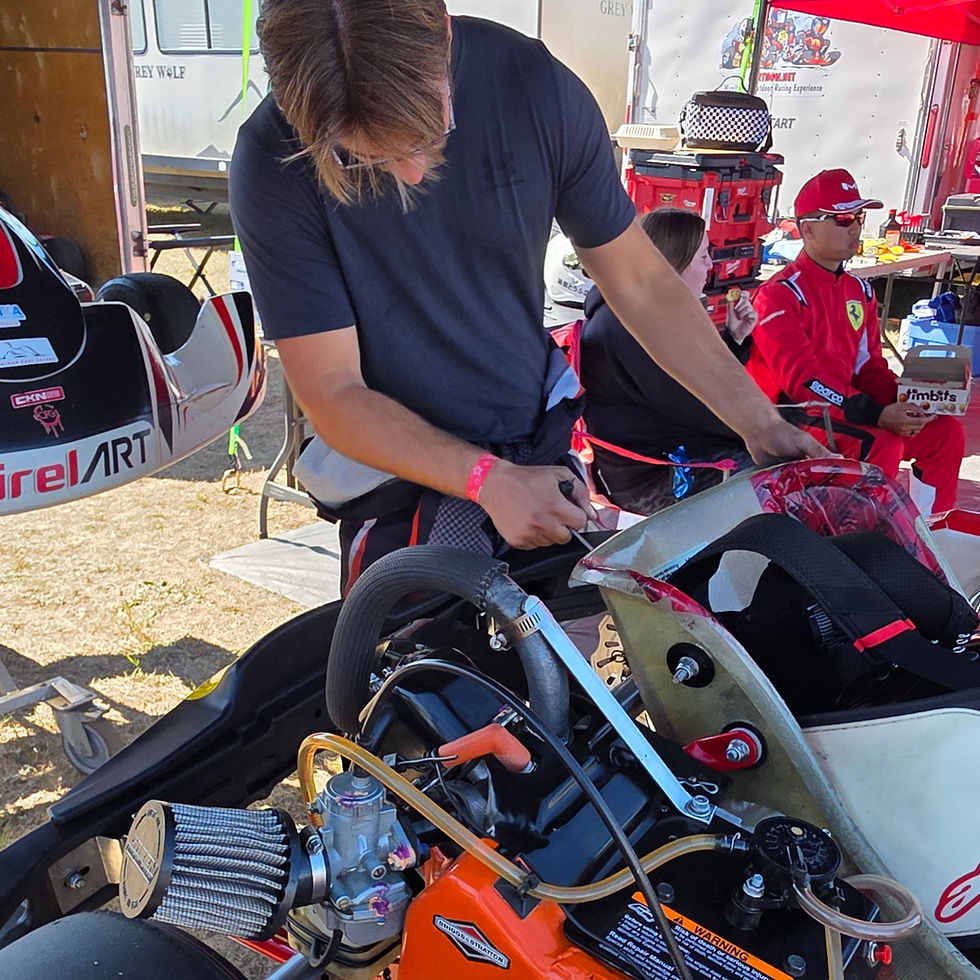
Because karts are mechanically transparent, drivers learn essential maintenance skills like fluid management, chain tensioning, and the critical importance of fastener torque to ensure safety under high vibration. The sport also introduces the science of vehicle dynamics, as participants learn to tune variables like gear ratios, tire pressure, and chassis stiffness to optimize performance. This develops a "diagnostic mindset," where the driver learns to translate physical sensations on the track into specific mechanical adjustments, fostering a deep technical respect for the machine and a practical understanding of how its components work in harmony.
A Community That Feels Like Family
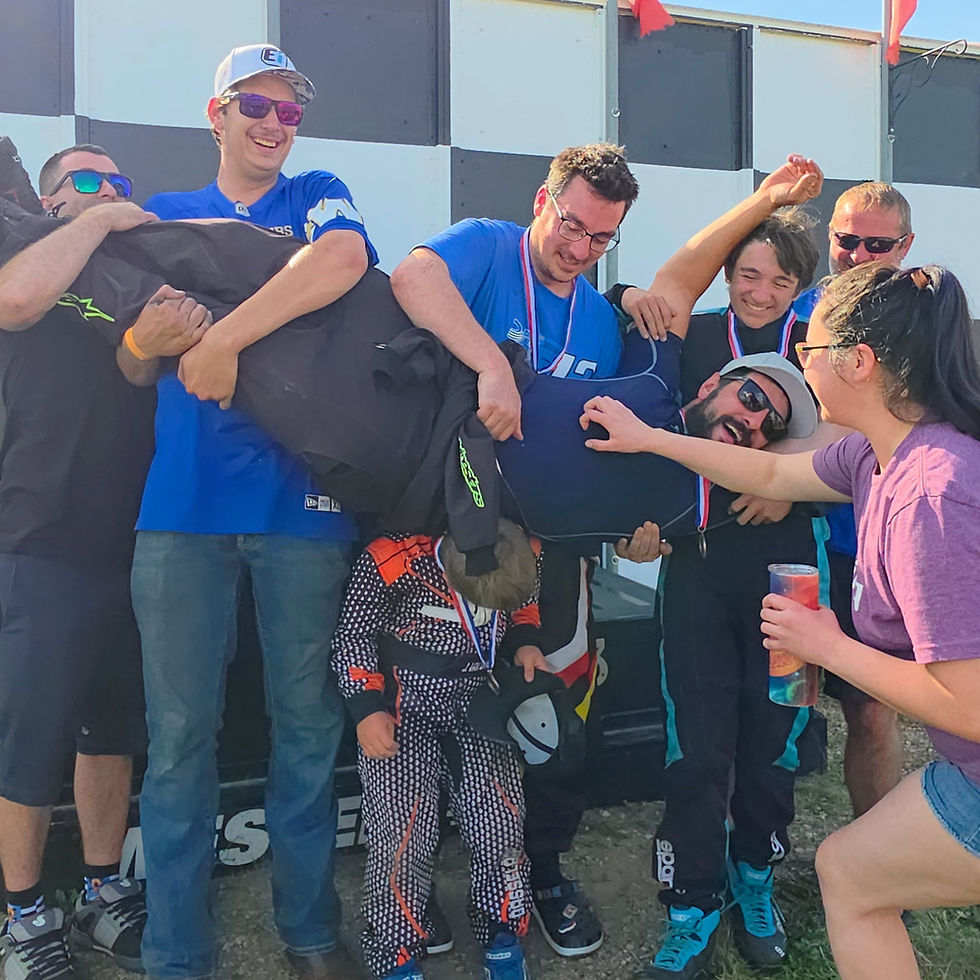
Unlike many sports where parents are passive observers, karting requires families to act as collaborative pit crews, leading to strong social bonds and intergenerational mentoring between seasoned racers and newcomers. This connection is deepened by the "traveling circus" nature of the sport, where families camp, eat, and troubleshoot mechanical failures together, creating an environment where even direct competitors will lend a spare part to ensure everyone gets back on the starting grid. Ultimately, the high emotional stakes of racing build a unique level of trust and camaraderie, turning a group of individual competitors into a tightly-knit, supportive network.